


Libraries, their silence, and books have shaped the minds of many young people since time immemorial. Nonetheless, education is evolving, and the debate on the issue of Physical Libraries versus Digital Libraries is significant, particularly in a digitally progressive nation like India. This will be reviewed in terms of cost, scalability, and impact.
1. Cost: Investment Today vs Investment for the Future
The Cost of a Physical Library
Starting a Physical Library is quite a costly undertaking, both initial and continuous:
- Infrastructure (space reserved, furniture, shelves)
- Printed books and journals
- Library management systems
- Maintenance and conservation
- Salaries and staffing of librarians
- Frequent modification of old versions
Traditional Library construction and maintenance may be costly to the schools with low budgets, and some are located in rural or semi-urban schools. Moreover, hardcopies degrade with time and thus have to be replaced.
The Cost of a Digital Library
A Digital Library, in its turn, works on a different model:
- Little physical space
- No printing or storage costs
- Content management on a centralized
- The ability to update easily without the need to
- Dynamic subscription-based
Rather than spending on brick-and-mortar infrastructure, schools are spending on digital access, which is often in the form of cheap annual plans. In the long run, this would greatly decrease the unit cost per student and increase access to resources.
Verdict on Cost:
A Physical Library will require constant capital investment, whereas a Digital Library can be predictable, scalable, and lower in long-term costs.
2. Scalability: Limited Shelves vs Unlimited Access
Physical Libraries and Their Limitations
A Traditional Library is restrained by:
- Physical shelf space
- Limited copies of books
- Fixed operating hours
- Location dependency
In case ten students require the same book and there are only two copies, then only two students can access the book. When you expand the resources, you expand the space; this will be more expensive.
Digital Libraries and Infinite Scalability
A Digital Library eliminates the following obstacles:
- Instantly available thousands of books
- Several students can read a book at the same time
- 24/7 access from anywhere
- Addition of new content easily without physical expansion
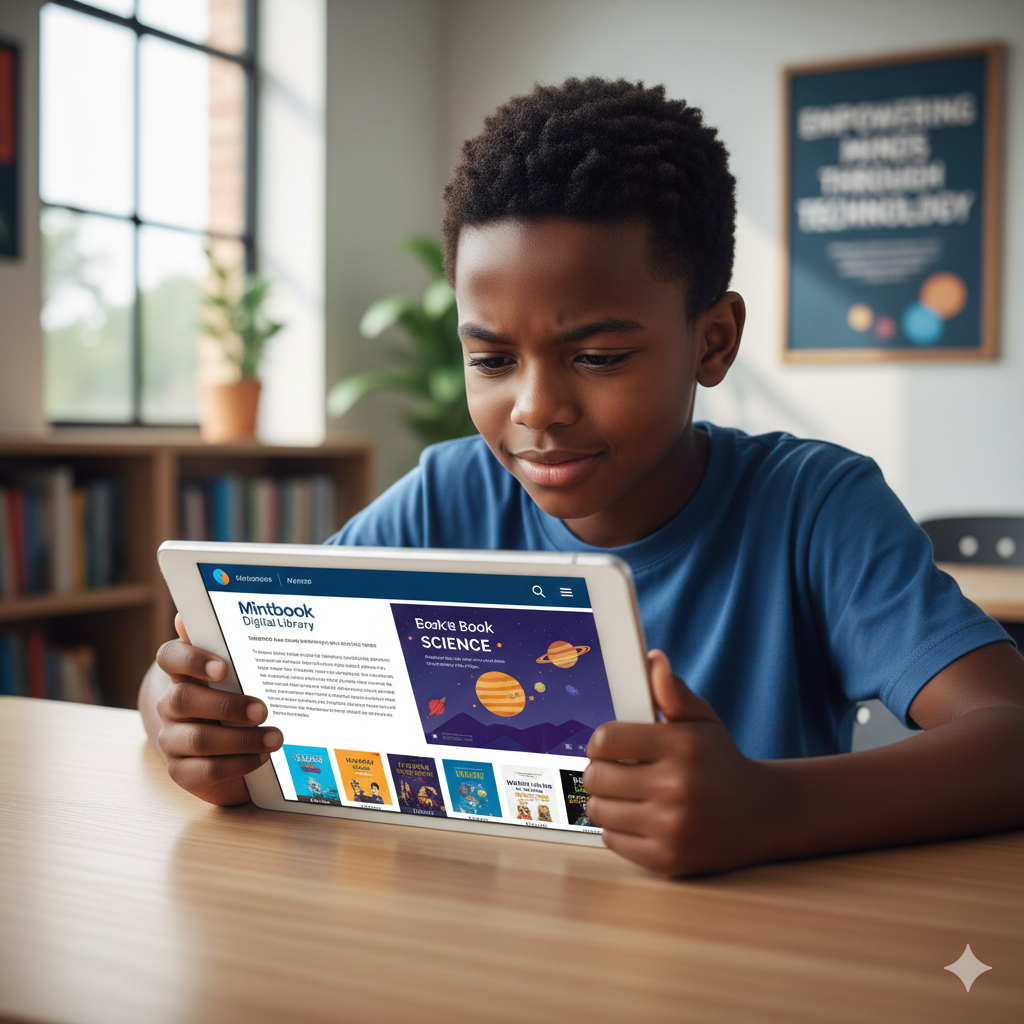
The world has become digitally connected, and scalability is not a luxury; it is a necessity. Schools have the opportunity to bring on board hundreds and even thousands of students without any concern for shelf space.
Verdict on Scalability:
It is quite obvious that Digital Libraries are better in terms of growth and reach than Physical Libraries.
3. Impact on Learning: Experience vs Engagement
The Emotional Value of a Traditional Library
It is impossible to deny the physical attractiveness of a Physical Library. It offers:
- Distraction free
- Tactile reading experience
- Formal learning
To most learners, particularly to younger children, having a hardcopy book develops a personal relationship.
The Transformative Impact of Digital Libraries
Nonetheless, a Digital Library, unlike a Traditional Library, helps to improve learning:
- Characteristic features of interactive
- Quick reference search
- The integration of multimedia (audio, visuals, videos).
- Tracking and Reading
- Personalized recommendations
Digital Libraries are also inclusive educational resources – having customizable fonts, text-to-speech, and features to make various learners access them.
What is more critical is the fact that present-day students are digitally born. They have a natural interaction with screens and interactive platforms. A Digital Library comes to them at their locations.
Verdict on Impact:
Physical Libraries provide a sense of nostalgia and organization, whereas Digital Libraries provide a sense of interaction, inclusion, and quantifiable results of learning.
Why the Debate Isn’t About Replacement — But Evolution
One should realize that it is not about the abolishment of Libraries but about mutation. A Traditional Library provided the base of the knowledge access. A Digital Library builds a base on which to fulfill the needs of the 21st century.
Indeed, a number of progressive organisations are implementing a hybrid approach of maintaining Physical Libraries and incorporating Digital Libraries in order to reach more people.
The Indian Education Landscape: Why Digital Matters Now
Schools in India are up to date with the policies based on technology, such as the National Education Policy (NEP 2020), which underlines:
- Digital inclusion
- Equal availability of
- Future-ready skills
- Technology-enabled learning
Digital Libraries, in this case, are not an option anymore; they are an educational equity instrument.
The remote schools now have the possibility of having access to the same quality of reading materials as the urban ones. The language diversity has a better way of being addressed. The updates can be made on the spot, and this makes the curriculum relevant.
Where Mintbook Fits In
It is in this regard that Mintbook is a game-changer.
Mintbook is not merely a Digital Library platform; it is an all-encompassing digital reading ecosystem that is school-specific.
Mintbook helps institutions in the following ways:
- Digital collections of books ardent to educational
- Inclusive learning Multi-language
- Age-appropriate categorization
- Reading progress monitoring teacher
- Low-cost subscription
- Anywhere anytime
Mintbook has a school implementation emphasis, unlike the generic eBook platforms. It allows administrators to expand easily with quality control.
Mintbook offers a smooth way to go as a school, whether it wishes to supplement its Physical Library or switch to a Digital Library model.
Making the Right Choice for Your Institution
In making the choice between a Physical Library and a Digital Library, the institutions should inquire:
- Are we future-ready?
- Can our current model scale?
- Do we optimize the learning engagement?
- Do we make all the students have equal access?
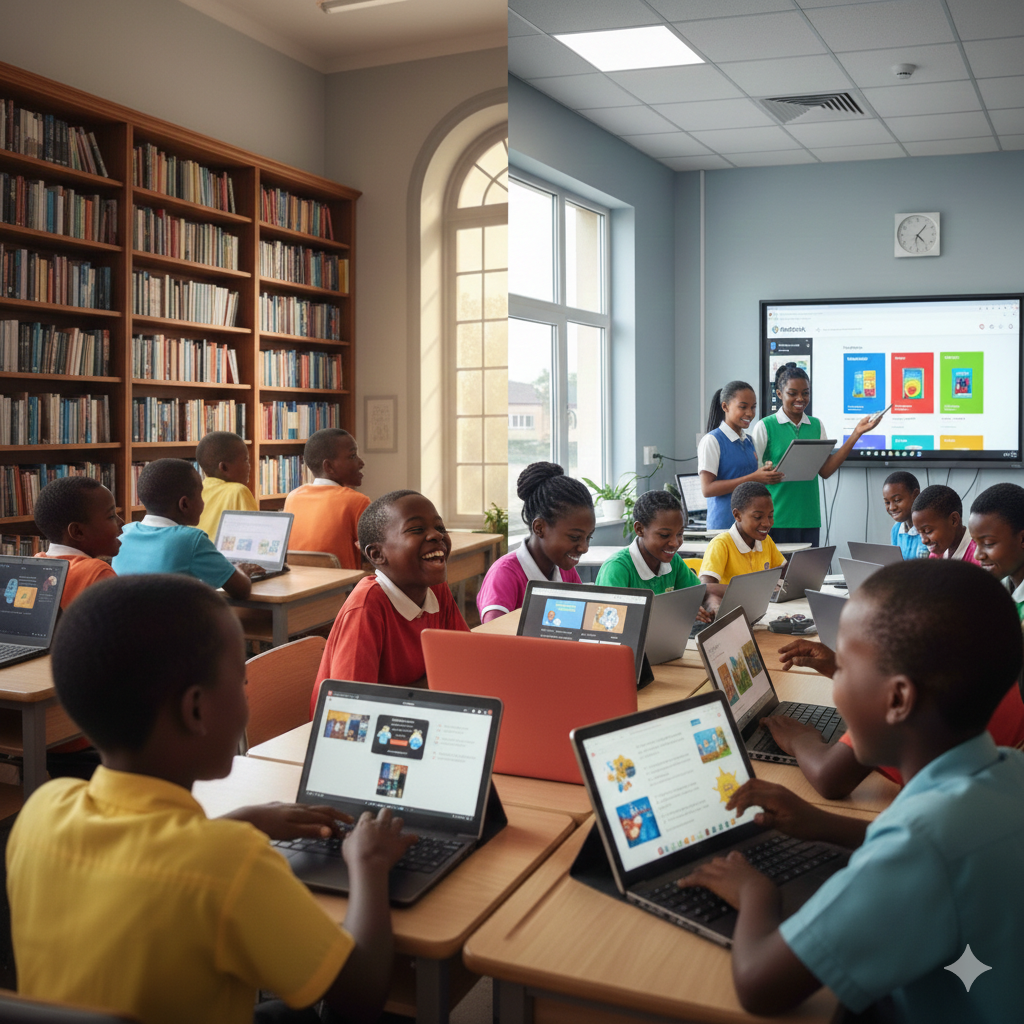
The Digital Libraries are more relevant in the future of Libraries in terms of accessibility, adaptability and analytics.
Final Thoughts
The Traditional Library will never lose sentimental feelings. But education now requires shelves and silence less. It requires reach, relevance and results.
Knowledge is stored in a Physical Library. It is multiplied by a Digital Library.
There is no need to delay further and get to know what Mintbook needs to propose to your institution as long as your organization is willing to adopt scalable, affordable, and meaningful learning solutions.
👉 Transform your school library into a future-ready Digital Library with Mintbook.
Give your students limitless access, assessable development and a knowledge base in their fingertips – all in a world of knowledge.
Get in touch with Mintbook today and get things working differently towards your school with Libraries.
