

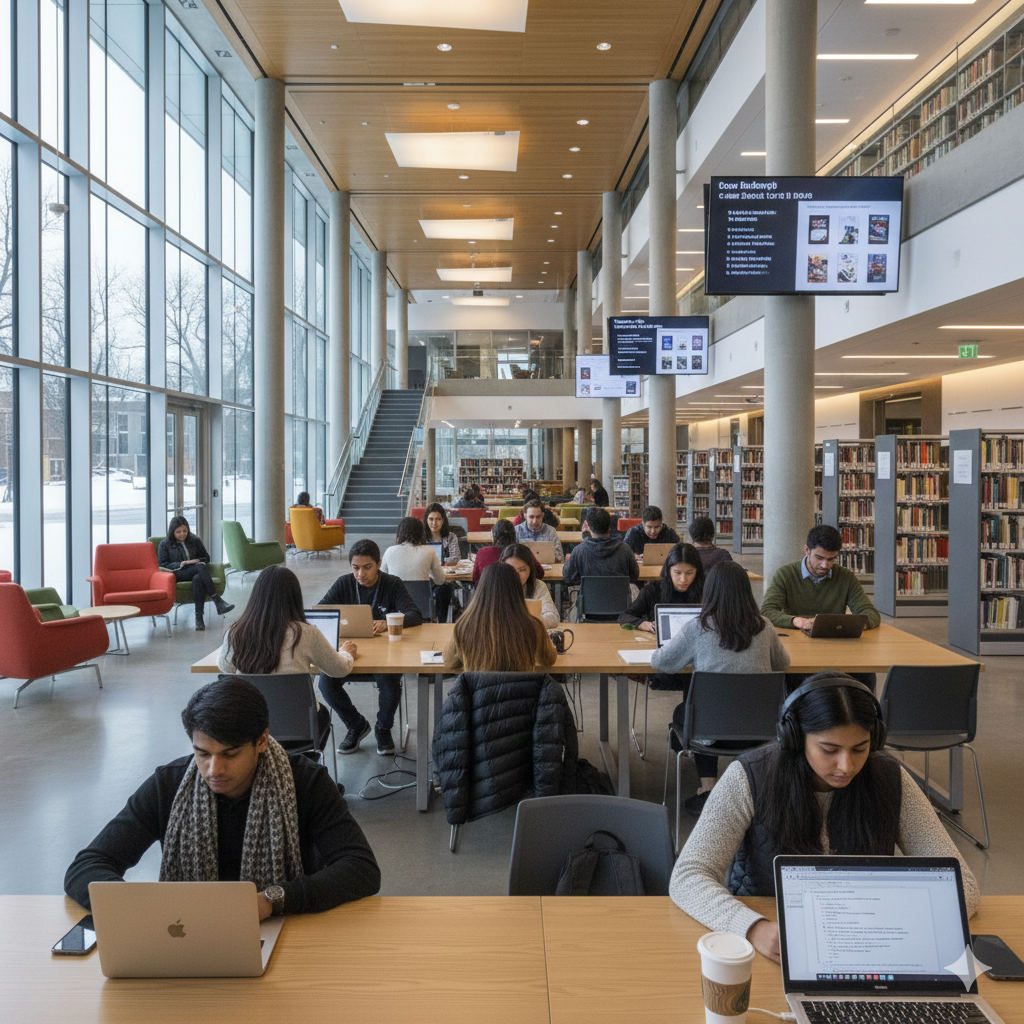
The higher education environment of Canada is changing fast. In hybrid classrooms, global mobility of students, programs based on research, and increasing demand for flexible learning, universities and colleges are thinking about the way knowledge is accessed and delivered. The core of this revolution is the Digital Library of Higher Education, which is a very potent solution that is much more than an eBook storage.
A Digital Library to Universities is more than a digital shelf of material; it is a living, breathing, and expanding ecosystem of knowledge that serves both students, faculty, administrators, and even researchers. We can examine how digital libraries are transforming universities and colleges in Canada – and how systems such as Mintbook are enabling institutions to remain future-focused.
1. Supporting Hybrid & Online Learning Models
The University of Toronto and the University of British Columbia are some Canadian institutions that have adopted blended and online learning styles. As students are present in the lectures on-campus and remotely, the physical libraries are not accessible enough to be accessed.
A Higher Education Digital Library permits:
- 24/7 academic
- Multi-gadget compatibility (tablets, laptops, smartphones)
- Incorporation with LMS
- Multi-user access to titles in real-
International students who study in different time zones or students in rural areas of the country greatly benefit. They do not have to wait until they come across the physical copy or borrowing slots because they can access the textbooks, journals, and research materials immediately.
2. Enhancing Research & Academic Excellence
Canadian universities are based on research. Colleges such as the University of Alberta and McGill University are always rated high in the world in terms of research productivity. An organized Digital Library for universities will speed up the research process because it provides:
- Peer review journals
- Inter-disciplinary scholarly
- Citation management and metadata
- Developed search and filtering

Digital libraries remove the geographical and physical limitations, which enable researchers to work effectively. Faculty can create reading lists online so that students will always have access to current, useful academic content.
3. Cost-Effective Resource Management
Physical library management includes expenses such as infrastructure, maintenance, personnel, storage space, and repetitive procurement expenses. Budget optimization is vital to numerous colleges and mid-sized universities in provinces such as Ontario and British Columbia.
Higher Education Digital Library minimizes:
- Printing and tangible storage
- Book replacement expenses
- Slow logistics and
The subscription-based or customizable content models enable institutions to scale resources according to demand. Administrators can also get access to real-time analytics – knowing which titles are the most popular, which departments require more resources, and how to make content investments the most.
4. Supporting Accessibility & Inclusive Education
Accessibility and inclusive education are highly valued in Canada. The digital libraries are especially effective in:
- Students with text-to-speech disabilities (visual impairments).
- Students who need variable fonts and magnifications on the
- Students of an international level who require multi-lingual
The audio-enabled books, customizable interfaces, and searchable content features make learning fair. A digital library in the current university age fits perfectly well with the idea of accessibility requirements and inclusivity.
5. Empowering Community Colleges & Skill-Based Institutions
It is not only the large research universities that benefit. Seneca College and George Brown College, which are community colleges, pay much attention to vocational and skill-based courses.
The Digital Library for Higher Education can be accessed by these institutions:
- Technical manuals of the
- Certification resources
- Learning modules will be
- Materials on career
Students pursuing business, healthcare, technology, and trades degrees are exposed to current materials in accordance with the latest industry standards – essential in the current fast-changing employment market.
6. Strengthening Digital Literacy & Academic Integrity
Digital libraries can also be used as an environment to teach research methodology and academic integrity. Students learn to find credible information and prevent plagiarism, learn to reference it with the options of built-in citation tools, referencing guides, and organized academic databases.
Digital content can be incorporated into the coursework by the faculty members, promoting responsible research activities. With time, this develops greater analytical and digital literacy abilities, capabilities necessary in the academic world and the work environment.
7. Data-Driven Academic Decision Making
Actionable analytics is one of the greatest benefits of a Digital Library to Universities. Institutions can track:
- Most accessed titles
- Patterns of usage by various
- Peak access timings
- Student engagement levels
The insights are useful in informing administrators at the university on curriculum and procurement decisions. The institutions will be able to match library investments to the real academic demand instead of making guesses about the required resources.
Why Mintbook is a Smart Choice for Canadian Institutions
With the ongoing digitization of higher education, universities and colleges must have more than a content repository; they must have a strategic partner. Mintbook, that is where it fits in.
Mintbook provides an exclusive Digital Library in Higher Education that is created to accommodate the various demands of the current universities and colleges. Its solutions include:
- An enormous and configurable online content
- Multi-device accessibility
- Seamless LMS integration
- State-of-the-art analytics
- Easy interface among students and the
- Full-sized solutions to large universities and smaller ones

The digital library platform by Mintbook is constructed in such a way that it provides institutions with flexibility, cost-effectiveness, and innovation. Regardless of the research-intensive universities or career-oriented colleges, Mintbook makes sure that knowledge is accessible, structured, and future-oriented.
The Future of Digital Libraries in Canada
The digitalization of Universities using digital libraries will only gain momentum in Canada as the country keeps investing in digital infrastructure and innovation. Digital libraries are transforming academic ecosystems by allowing remote learners located in northern areas to participate as well as facilitating research partnerships around the globe.
The institutions that are adopting a powerful Digital Library for Higher Education today are establishing themselves as progressive, student-focused, and competitive at the global level tomorrow.
When your university or college in Canada is seeking to upgrade its academic materials, automate the work of the libraries, and give the learners an opportunity to access the knowledge without any issues, Mintbook is willing to help you in your adventure.
Find out what Mintbook can offer as a Digital Library provider today and change the manner in which your institution learns, teaches, and conducts research.
