

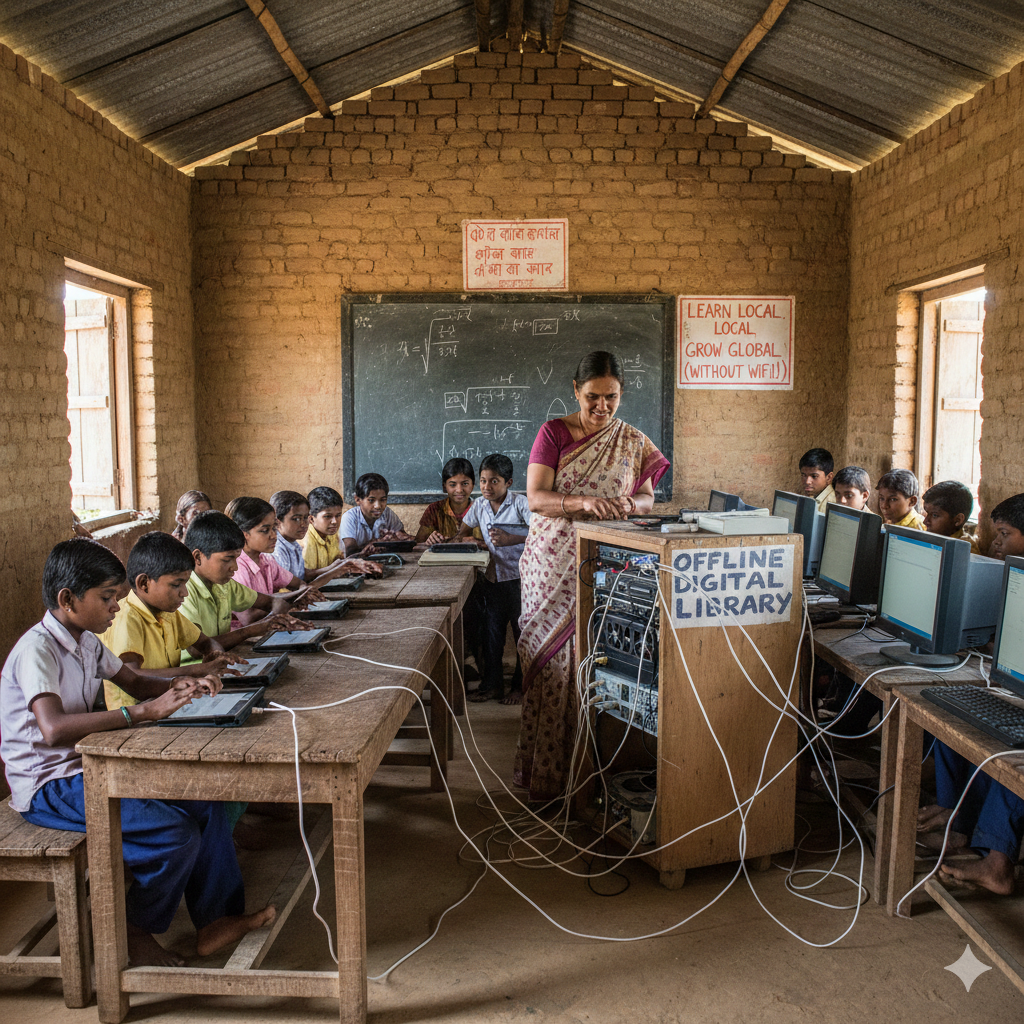
In a diverse and broad country like India, access to quality education is usually geographical. Whereas urban schools are equipped with high-speed internet and smart classrooms, a good number of rural and remote schools are still dealing with a slow connection- or no connection. The result? A widening learning gap.
However, here is the good news: a Digital Library does not necessarily require fast internet to change the way things are done in education. Even low-bandwidth areas are able to be provided with world-class learning resources with the right technology model. This is where such innovations as an Offline Digital Library and a Portable
Digital libraries are transforming educational equity. We shall look at the ways digital libraries are bridging the divide and facilitating inclusive learning in difficult settings.
The Reality of Low-Bandwidth Learning Environments
Internet connectivity is unreliable in most of the semi-urban and rural schools. Instructors can use old textbooks, insufficient reference materials, and little multimedia assistance. Students, on their part, do not receive interactive learning experiences that are gradually becoming the order of the day elsewhere.
Low bandwidth affects:
- Availability of revised curriculum
- Access to research materials and reference
- Learning through exposure to
- Self-directed and individualized learning
This generates a digital divide, which directly affects the performance, confidence, and future preparedness of the students.
The Role of a Digital Library in Bridging the Gap
A properly developed Digital Library is not just an online storage of eBooks. It turns into a knowledge-based warehouse, organized and curriculum-based, which is helpful to both students and teachers, as well as administrators.
Digital libraries are useful in low-bandwidth areas:
1. Reducing Dependency on Live Internet
The preloading of content and the ability to access it offline mean that schools stop using real-time streaming or downloads. Students are not interrupted with access to textbooks, reference materials, videos, and practice modules.
2. Providing Standardized Quality Content
Regardless of whether a school is situated in a big city or a village, there can be standardization of academic resources of high quality. This will provide equity in education exposure.
3. Supporting Multilingual and Multi-Grade Learning
Digital libraries can store content of grades, boards, and languages- rendering it flexible to the diverse classes.
Offline Digital Library: Education Without Internet Barriers
Offline Digital Library is specially created to work without always having an internet connection. The content is stored on the school campus in a server or device. The student and teachers have been connected through local Wi-Fi, even in situations when there is no external internet.
How It Works:
- Precreated digital content (eBooks, videos, question banks, encyclopedias)
- School access using school devices, tablets, or computers
- Reliable, managed use
- Periodical updates on the occasions that the internet is
This approach ensures:
- Zero buffering delays
- Consistent integration in the
- Cost savings on data usage
- Annual availability of
In schools with low-bandwidth areas, this model is not only convenient but also a revolution.
Portable Digital Library: Learning That Travels
Even a fixed offline system may not be feasible in locations with limited infrastructure. This is the place where a Portable Digital Library can be effective.
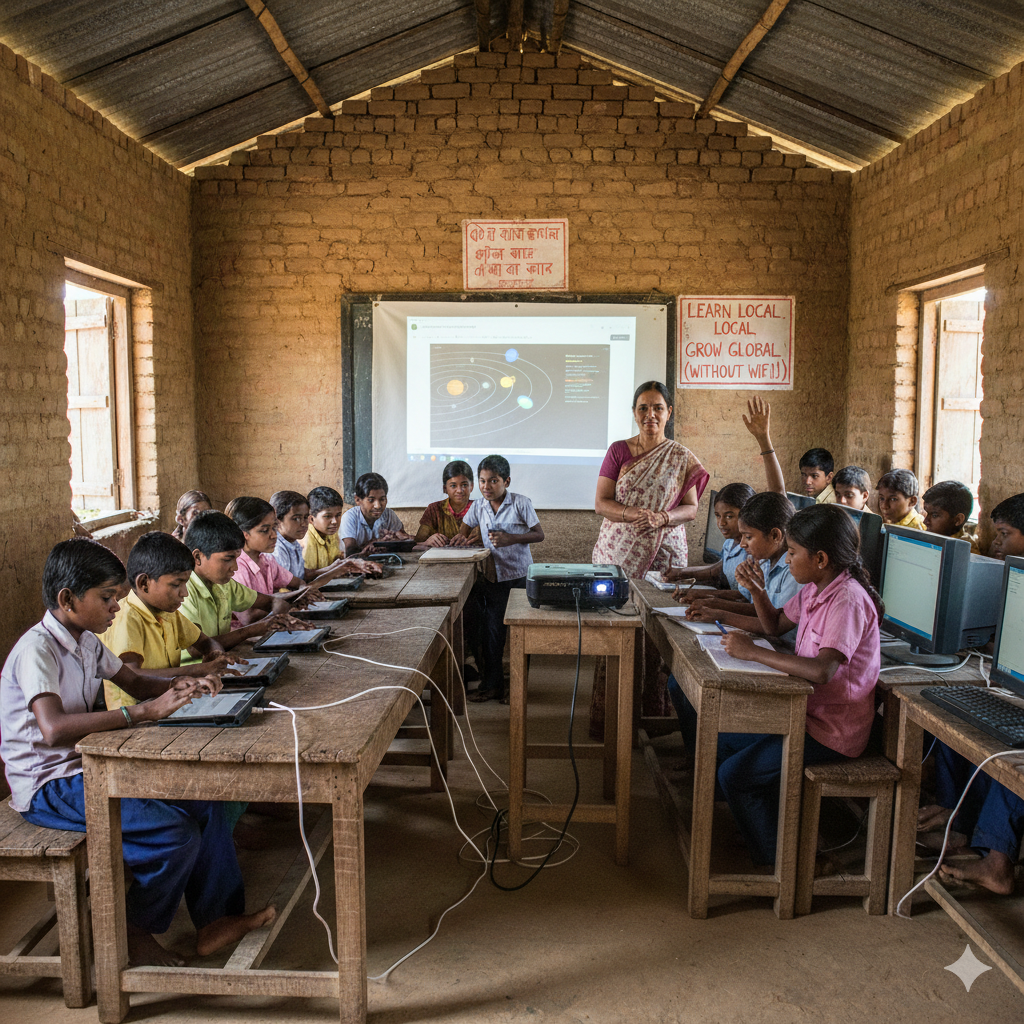
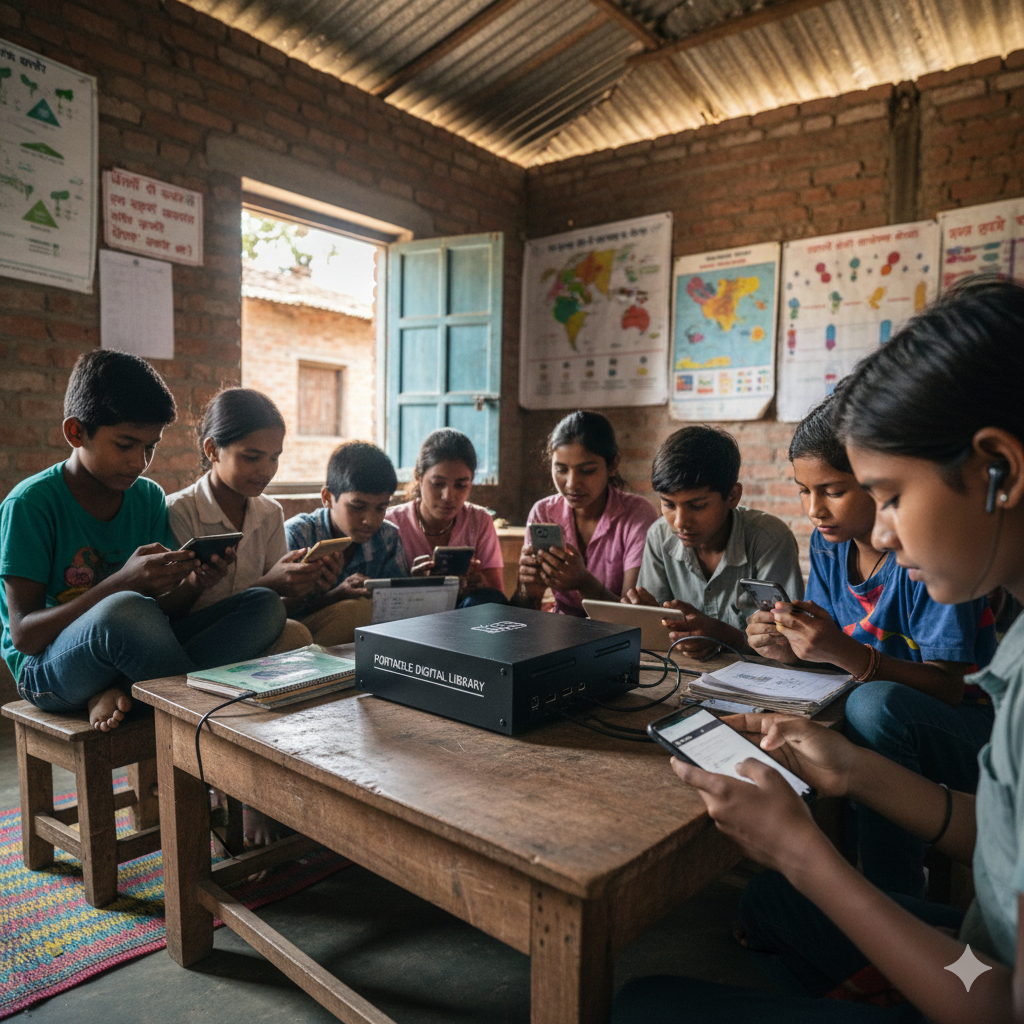
The portable model is small, easily portable, and it can be moved between classrooms or even schools. It has low technical infrastructure and compatibility with standard equipment.
Why It Matters:
- Perfect in isolated villages and the tribal
- Funds neighborhood learning
- Authorizes temporary or mobile
- Superb when it comes to government outreach
Portability has made quality education independent of location. Students can learn wherever they go.
Impact on Teachers and Students
For Teachers
In low-bandwidth areas, teachers are known to experience a shortage of resources. An offline or portable digital library provides them with:
- Structured lesson support
- Multimedia teaching aids
- Beyond textbook reference
- Evaluation and drill
It saves more time in preparation and improves classroom interest.
For Students
Students gain:
- Self-learning opportunities
- The availability of visual and interactive
- Improved exam preparation
- Broadening the sources of
Most importantly, it instills confidence – students are no longer disadvantaged by geography.
Supporting National Education Goals
India has a vision of education that focuses on inclusiveness, digital literacy, and equity in access. A Digital Library model (more so, offline and portable) can be highly compatible with these objectives.
Schools will be able to:
- Enhance the basic literacy and
- Facilitate self-directed
- Increase online
- Equip students with competitive academic
Technology is a balancing force, not a separating one.
How Mintbook Makes Digital Libraries Accessible Everywhere
At mintbook.com, the mission is easy: knowledge democratization. Mintbook realizes that there should be no issues with connectivity that could hinder education.
This is how Mintbook can be used to assist low-bandwidth regions:
Comprehensive Digital Library Solutions
Mintbook offers moderated academic material according to the school curricula, making it relevant and of good quality.
Offline Digital Library Deployment
Educational institutions are able to have a complete offline infrastructure that is able to integrate well with campus networks without the need for constant internet connectivity.
Portable Digital Library Models.
Where there is no internet or limited connection over infrastructure, Mintbook provides small-sized, easy-to-install portable peripherals that are able to provide powerful learning materials.
Easy Content Updates
At times of limited internet connectivity, it is easy to update systems to maintain resources up-to-date and in sync.
Scalable & Customizable
Mintbook solutions are scalable, whether there are 100 students in a school or 1,000 students in a school.
The Bigger Picture: Education Without Boundaries
The typical way of closing the gaps in learning is not to bring some devices or Wi-Fi together. It is about meaningful access to structured high-quality knowledge- irrespective of bandwidth.
A Digital Library, particularly when it is in the form of an Offline Digital Library or Portable Digital Library, makes a difference in the classroom of the underserved regions. It empowers teachers. It uplifts students. And it creates a more balanced educational environment.
Technology is not something that, when used wisely, will increase divisions but rather bridges them.
Ready to Empower Your School?
When your institution lives in a low-bandwidth area or wants to provide equal access to knowledge, Mintbook can assist you in establishing a sound digital library tool that will suit your requirements.
See how Mintbook.com can make campus life orderly, offline, and mobile learning.
Get to know Mintbook nowadays, and make sure that connectivity will never hold students back.
