

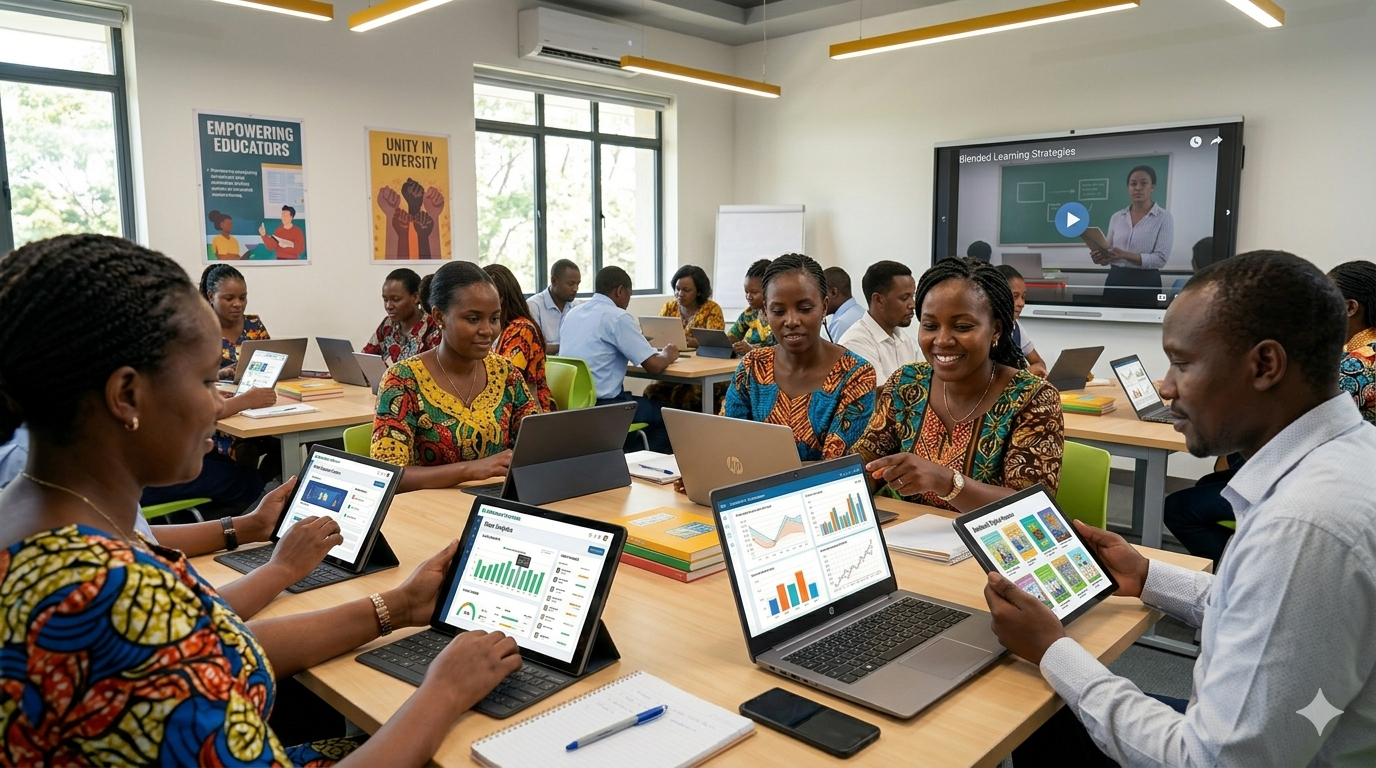
Education is experiencing a great change across Africa. Governments, non-governmental organizations, and even privately-owned institutions are investing in digital infrastructure, curriculum reform, and teacher capacity building. However, access to education has been enhanced, but there is still a great variation in the quality of teaching. The core of this struggle is a mere fact: to change education, we must put more emphasis on training the teachers.
This is where single learning platforms come in- integrating content, training tools, and performance tracking into a single ecosystem. With an LMS System, Digital Library, and data-driven insights, when combined into a Unified Learning System, Africa can transform teacher training at scale.
The Teacher Training Gap in Africa
The issue of teacher shortages and the lack of quality training is a persistent situation in most African countries. In rural and underserved locations, the teachers are not usually provided with current teaching strategies, curriculum-based content, and ongoing professional growth.
The old-fashioned training programs (usually workshop-based or centralized) are insufficient. They are costly, time-consuming, and not scalable. What is more important is that they do not give continuous support. Educators are provided with a single training session and are supposed to make changes without any further instruction or feedback.
Digital transformation is needed in this case.
What Is a Unified Learning System?
Unified Learning System is an enhancement of an LMS. It combines:
- A powerful LMS System with structured training and testing.
- A full Digital Library of learning resources.
- Reporting and analytics to monitor improvement and results.
- Peer learning and mentorship tools.
Rather than the disjointed tools and unrelated learning experiences, all is integrated into one platform. This not only makes access easy but also provides uniformity in the delivery of training.
Why Unified Platforms Are Ideal for Teacher Training
- Scalability Across Regions
Africa is vast and diverse. A centralized platform enables simultaneous delivery of training programs to various regions without necessarily having physical structures. It does not matter whether a teacher is in an urban city or in a rural area: He or she can get the same high-quality training modules.
- Continuous Professional Development
The process of teacher training cannot be a single occasion. Educators can also experience continuous learning with an LMS System in the form of micro-courses, certifications, and refresher courses. This keeps them abreast with new teaching techniques and changing curricula.
- Access to Rich Digital Content
A fully-fledged Digital Library offers teachers lesson plans, videos, interactive materials, and subject-specific resources. This enables them to improve classroom presentation and establish stimulating learning conditions.
- Data-Driven Insights
Single platforms provide real-time analytics. Administrators are able to monitor teacher development, define areas of skills deficiency, and assess the training program’s effectiveness. This is an evidence-based methodology that makes interventions specific and effective.
- Peer Learning and Collaboration.
Being a teacher may be lonely, particularly in rural places. Integrated systems foster discussion forums, peer review, and mentoring opportunities that help create a community of lifelong learning.
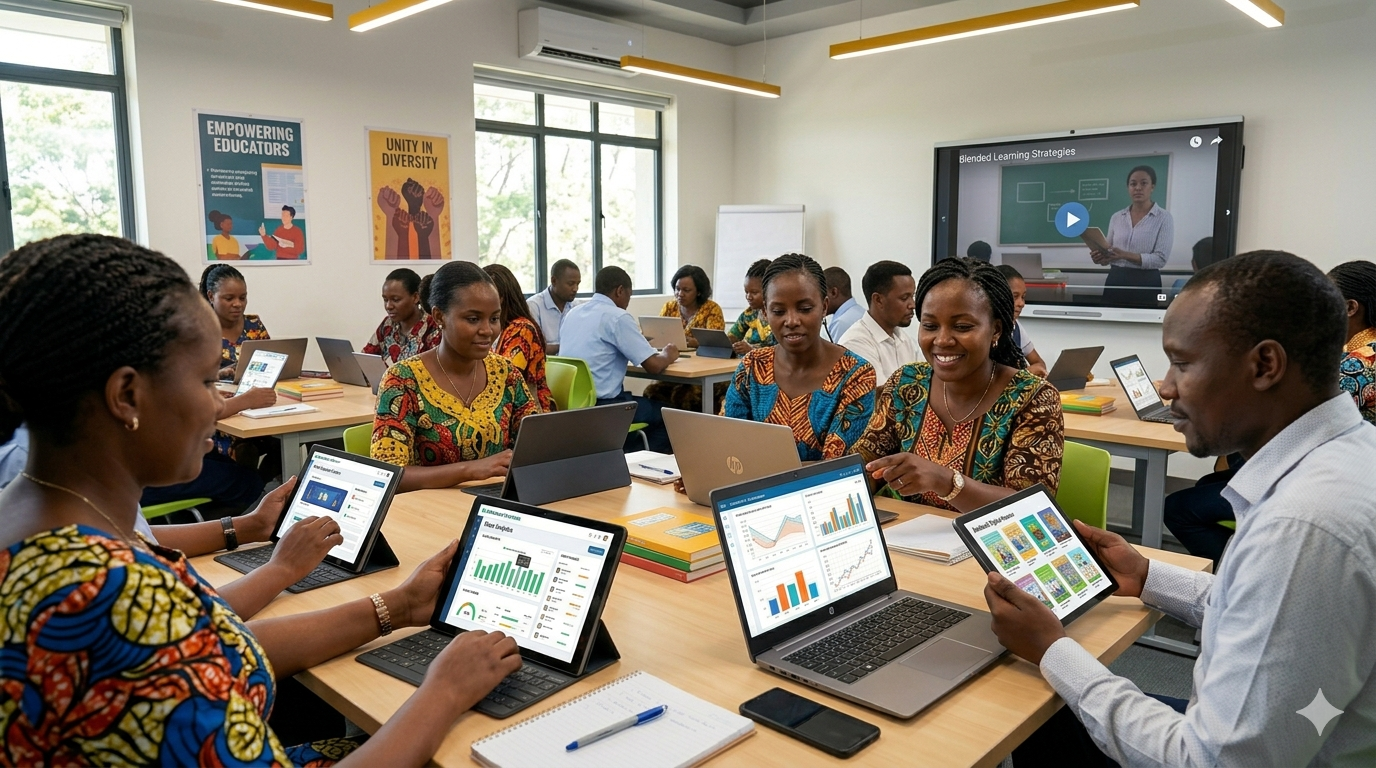
Real Impact: Training to Classroom Impact.
With the appropriate tools and knowledge in the hands of teachers, the influence is both short-term and long-term. Classrooms are made interactive. Students are engaged more. Learning outcomes improve.
An example is that a teacher who is trained in a Unified Learning System can:
- Discuss complex issues using multimedia materials in a Digital Library.
- Use modern teaching methods acquired with LMS modules.
- More effectively measure student performance with digital tools.
- Their teaching approaches are constantly being improved according to the feedback and analytics.
This traditional-to-tech-enabled teaching change leads to a ripple effect; not only is it benefiting teachers, but the whole education ecosystem.
Overcoming Challenges in Implementation
Although the advantages are obvious, there are challenges to unifying learning systems in Africa:
- Limited internet connectivity in remote areas
- Digital illiteracy among teachers.
- Public education system budget constraints.
Nonetheless, these difficulties can be overcome. These gaps can be effectively addressed with solutions such as offline-enabled LMS platforms, mobile-first design, and localized content.
This is in the selection of the appropriate technology partner, one that is aware of the special needs of African education systems.
How Mintbook Supports Teacher Training in Africa.
It is at this point that Mintbook becomes a game-changer.
Mintbook is a well-developed Unified Learning System that is meant to be used by educational institutions, governments, and training organizations. With the integration of a sophisticated LMS System and a robust Digital Library, Mintbook can facilitate seamless, scalable, and effective training of teachers.
This is how Mintbook can be used to train the teachers:
- Integrated LMS System
Provide organized training, certifications, and evaluations with ease. Instructors are able to learn at their own pace, and institutions monitor progress on-the-fly.
- Extensive Digital Library
Gain access to a huge database of course-related materials, such as videos, eBooks, lesson plans, and interactive modules- designed to suit various learning requirements.
- Offline Accessibility
Mintbook was created to be used in areas where connectivity is limited and, therefore, provides unbroken learning through offline features.
- Customizable Learning Paths
Develop individual training experiences of teachers depending on their subjects, levels of experience, and skills deficiencies.
- Analytics & Reporting
Get practical information about teacher work, interaction, and learning outcomes – to make data-based decisions.
- Localized & Inclusive Content
The presence of multiple languages and culturally appropriate materials will make sure that the training will be received by local educators.
The Future of Teacher Training in Africa
The value of unified learning platforms will just increase as Africa continues the digital transformation process. Governments and institutions are appreciating the fact that teacher training is the best approach to enhancing the education results.
With a Unified Learning System, Africa will be able to:
- Standardize teacher preparation in areas.
- Scalability enhances educational quality.
- Provide teachers with new technologies and materials.
- Close the policy and classroom gap
Final Thoughts
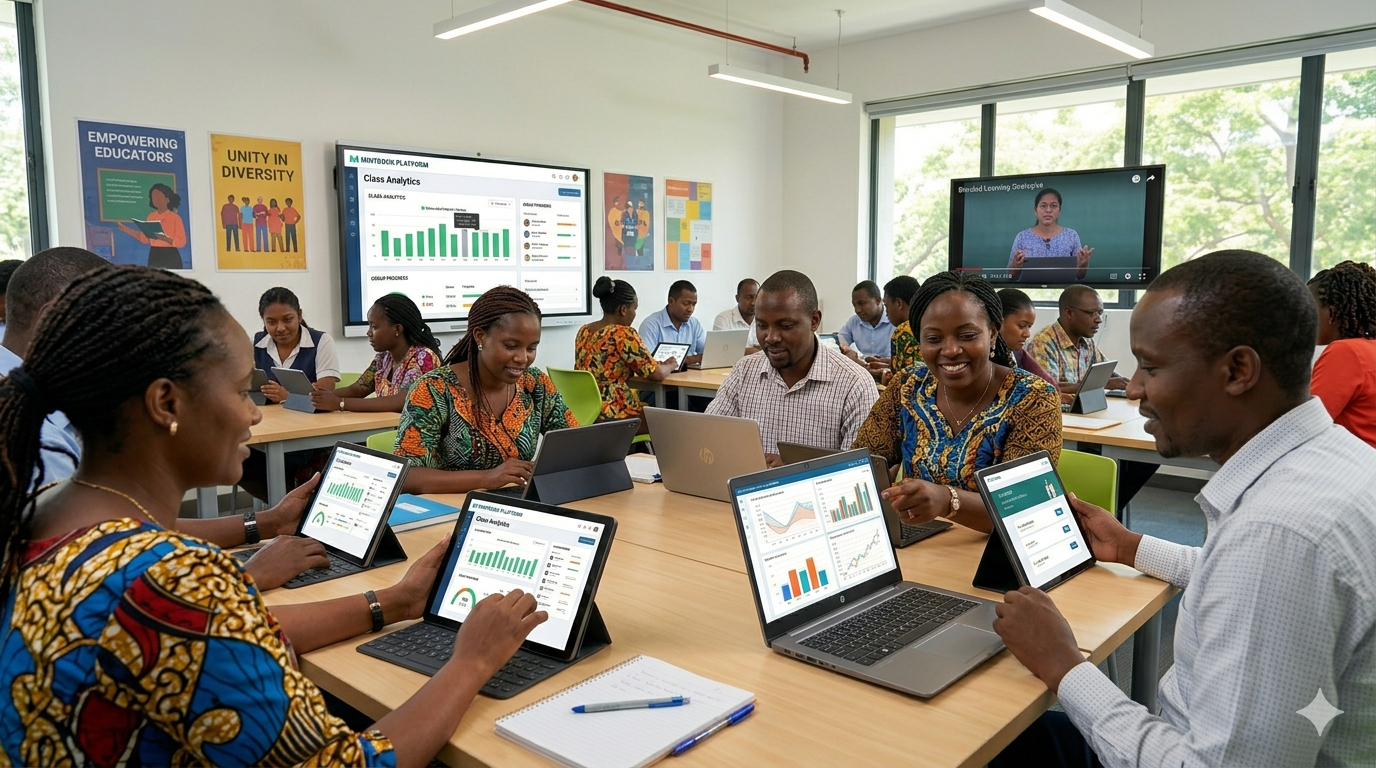
The reform of education begins with teachers. In the digital era, the education of teachers needs to be trained more than it was previously; it needs innovation, access, and scalability.
All of this is combined in unified learning platforms, and it would form a seamless ecosystem within which teachers can learn, grow, and thrive. This is not to Africa an opportunity, but a necessity.
Mintbook is the best partner to have in case you want to change the way teachers are trained and improve learning outcomes. Learn about the Unified Learning System by Mintbook and start doing something to empower teachers, improve classrooms, and create the future of education in Africa.
