

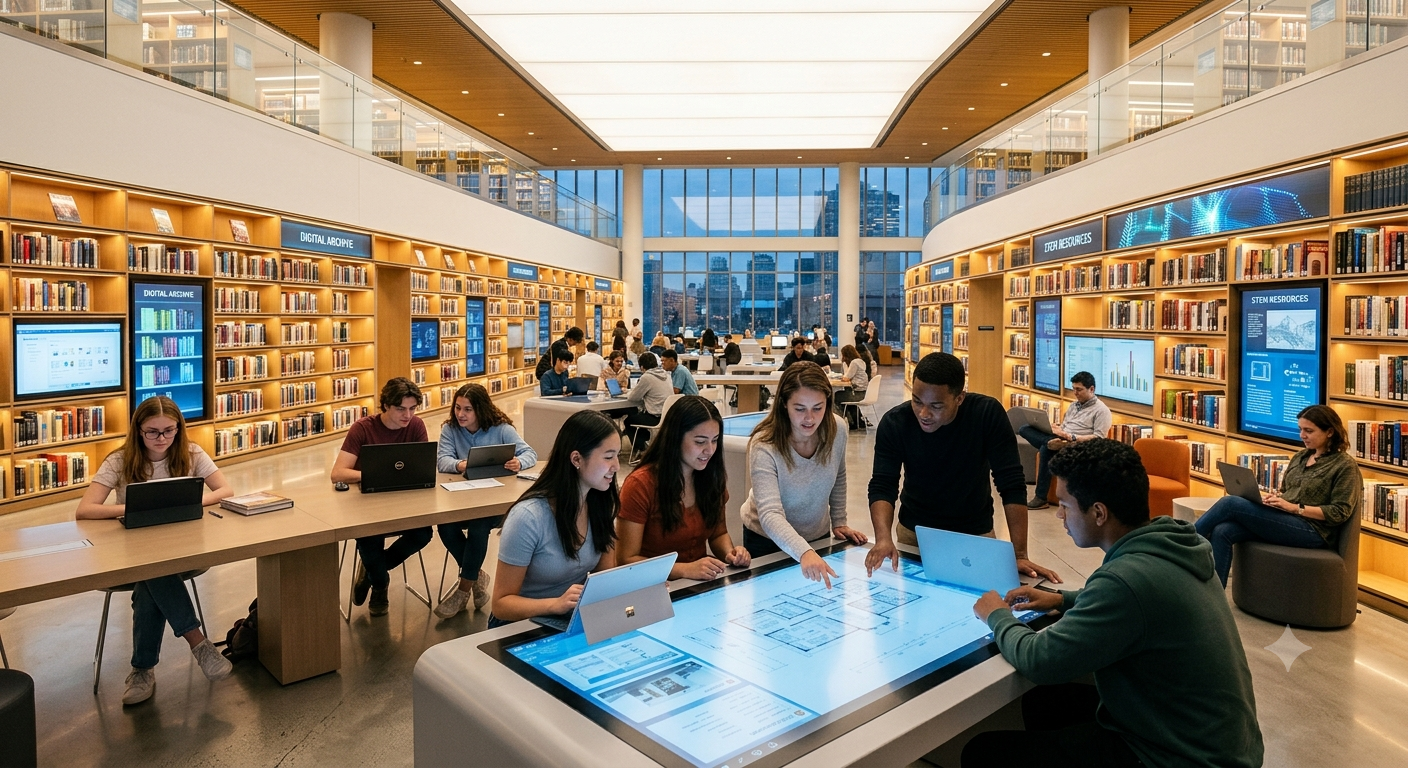
Libraries are recognised as quiet places with rows of books on their shelves for generations. They were places where students rented books, researchers had a chance to look into books of reference, and readers read fresh tales. Today’s needs are very different, and so are the libraries.
The role of libraries in the future is no longer a place for a library (of books). They are becoming active learning environments in which individuals can acquire knowledge both practically and learn new skills and be equipped for academic and professional excellence. School libraries are changing from mere sources of information to centers of learning, and with the advent of digitalization in the field of education, libraries are becoming more and more a place of learning and skill development.
Why Libraries Are Evolving
People have been changing the way they get information through technology. Information is at your fingertips with smartphones, web courses, e-books, and AI learning tools. So what students require now is direction, organization, learning, and quality education materials.
This change has prompted library innovation, as libraries are no longer just bookshelves but places of collaboration for learning. Libraries in schools, colleges, public institutions, and organizations are evolving and meeting the expectations of lifelong learning and continuous education.
In place of the question, “Where can I find this book?” today’s learners ask, “How can I learn this skill?
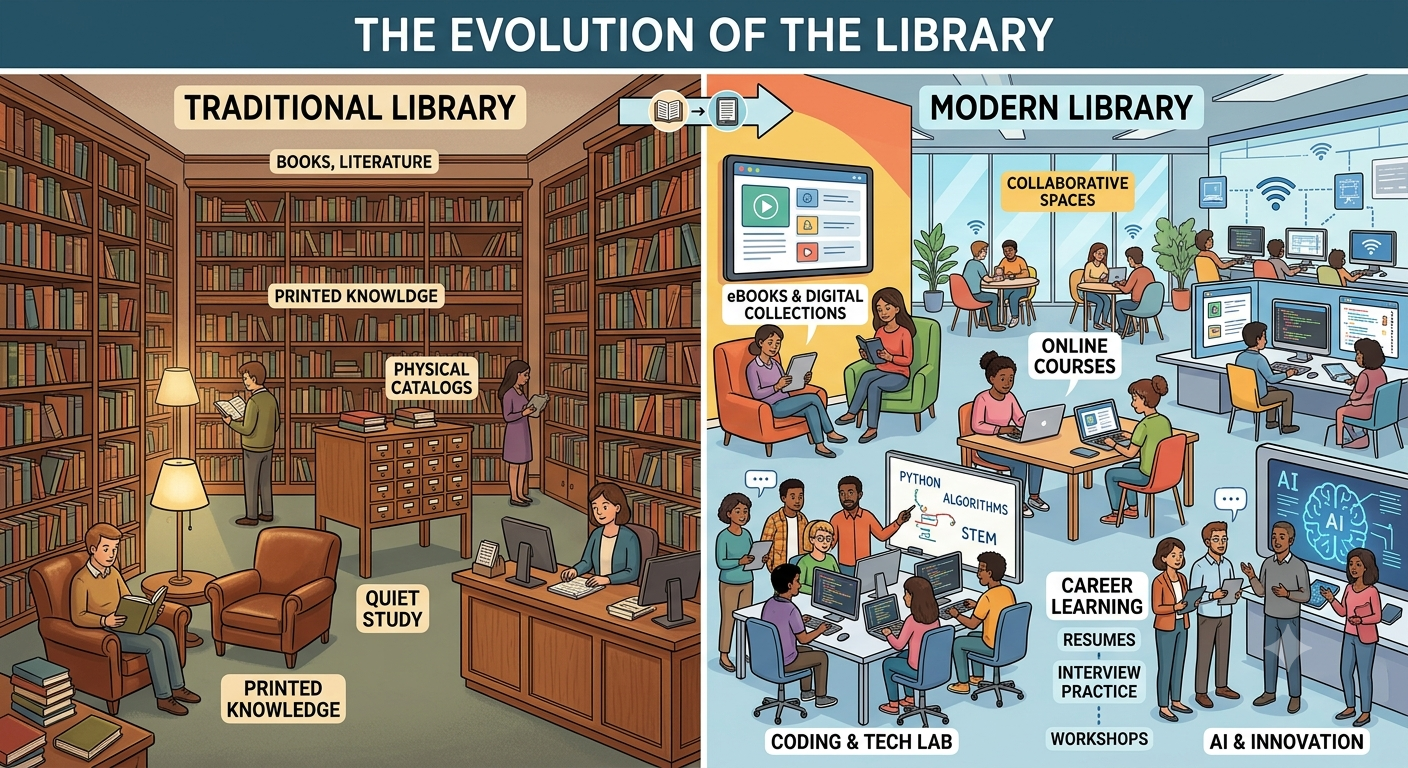
From Reading Rooms to Learning Hubs
Over the past few decades, the functions of libraries have been growing by leaps and bounds. The learners are now supported in a modern library, both physically and virtually.
The modern libraries of today may offer:
- Digital books and eBooks
- Interactive video learning
- Skill-based certification courses
- Competitive exam preparation resources
- Career guidance materials
Coding and technology learning content
- Language learning programs
- Collaborative learning spaces
This transformation can be used to make libraries skill centres to prepare the learners for future careers and to support traditional education.
Supporting Employability Through Skill Development
In all industries, there is an increasing need for practical skills. Employability skills such as problem-solving, digital literacy, communication, and technical skills are becoming more and more important than academic skills.
Libraries can help fill this void with access to:
- IT and digital skills courses
- Banking and government exam preparation
- Entrepreneurship resources
- Financial literacy programs
- Soft skills training
- Career development content
This is why libraries are a valuable asset to the community and can have a direct impact on workforce readiness.
Libraries are in the future to help learners be job-ready, flexible, and confident in the future economy.
Digital Transformation Is Driving Library Innovation
Digital technology is a key catalyst of library innovation.
Many of the traditional restrictions of digital libraries are removed when they are based on the cloud. Students don’t have to go to a library at specific times and wait for books to be available. Rather than that, they have the opportunity to check out thousands of educational resources anytime and anywhere.
Digital platforms also have:
- Personalized learning recommendations
- Multi-device accessibility
- Offline reading options
- Multimedia learning experiences
- Real-time content updates
- Usage analytics for institutions
This flexibility, engagement, and inclusiveness enhance the learning process.
Libraries as Community Skill Centers
Libraries are becoming more of a community development center than an educational institution.
They are used by students to prepare for exams. Teachers are provided with new teaching materials.
Those looking for jobs become proficient in new technologies.
Experts continue to upgrade their knowledge and skills for their career development. Senior citizens delve into lifelong learning experiences.
Children get used to reading with interactive content.
Libraries are moving to a new role as a community skill centre for knowledge sharing and personal development by catering to many different communities.
Why Schools and Colleges Need Modern Libraries
Schools are facing the challenge of teaching students to not only excel in school but in the world of work as well.
These expectations can’t be satisfied by traditional libraries. Modern libraries assist schools and colleges in the following ways:
- Providing curriculum-aligned digital content
- Supporting blended learning models
- Encouraging self-paced learning
- Improving digital literacy
- Offering competitive exam resources
- Enhancing research capabilities
- Promoting continuous learning beyond classrooms
Students who engage with the library as an active learning environment have access to opportunities beyond the textbook.
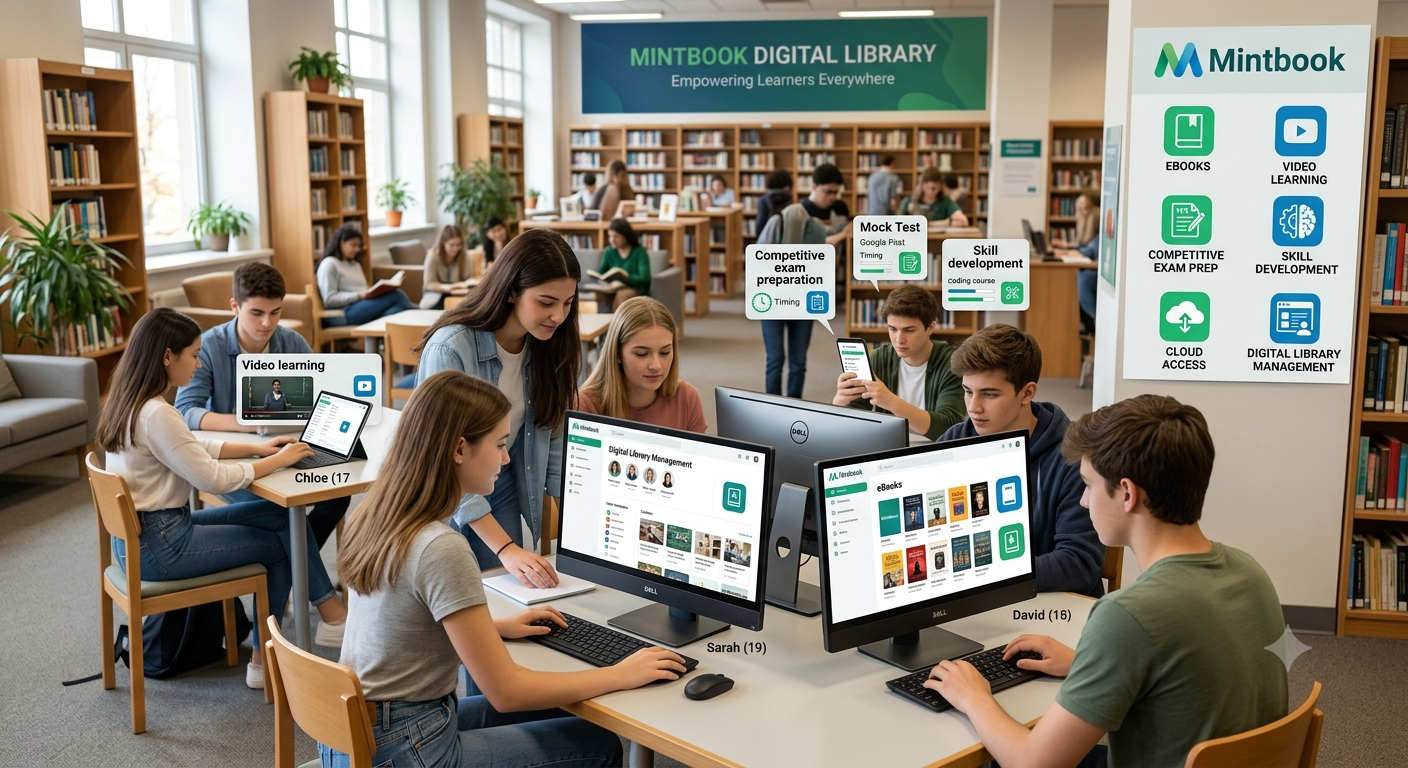
How Mintbook Is Shaping the Future of Libraries
In Mintbook, we are dedicated to fostering lifelong learning, innovation, and inspiration in libraries.
Our digital library platform aims to empower schools, colleges, universities, government institutions, and organizations to change the nature of their library to a learning environment of the future.
With Mintbook, institutions can provide users with:
- A vast collection of eBooks and digital learning resources
- Skill development and career-focused content
- Competitive exam preparation materials
- Easy-to-use digital library management
- Secure cloud-based access
- Multi-device compatibility
- Scalable solutions for institutions of all sizes
While Mintbook transforms bookshelves into interactive learning spaces, it doesn’t stop there; Mintbook can transform institutions into spaces where learners are engaged, prepared for academic success, and ready for professional success.
This is in tune with the future concept of libraries in which access to knowledge is associated with opportunities for skill development.
Conclusion
Libraries are always a symbol of knowledge, but their job is to grow. Today’s learners require a mix of information and skills, an opportunity to build a career, and to adapt to a fast-changing world.
The future of libraries is one of inclusive, technology-rich learning environments that enable learning, innovation, and lifelong learning. With ongoing innovation in the library, any institution can become a dynamic skill centre where libraries can enable all learners.
When you’re ready to create a smarter, more impactful library experience, Mintbook has everything from technology to content and expertise that can help you do just that.
Visit Mintbook today and embark on a journey towards a future-ready library, an environment where skills are cultivated and learning is limitless.
