


Introduction
What Is a Unified Learning Platform? It is one of the most important questions educational institutions are asking as they accelerate their digital transformation initiatives. Schools, colleges, universities, libraries, and training organizations are no longer looking for standalone tools to manage learning. Instead, they need connected platforms that bring together digital content, learning management, assessments, collaboration, and analytics into one seamless ecosystem.
Traditionally, institutions relied on separate systems for Learning Management Systems (LMS), digital libraries, virtual classrooms, assessments, and communication. While these solutions served individual purposes, managing multiple platforms often created fragmented learning experiences, duplicated administrative effort, and increased technology costs.
A Unified Learning Platform addresses these challenges by integrating essential learning tools into a single platform. By combining an LMS, digital library, assessments, collaboration tools, analytics, and AI-powered capabilities, institutions can create a more engaging, scalable, and personalized learning experience for students, educators, and administrators.
In this guide, you’ll learn what a Unified Learning Platform is, how it differs from traditional learning systems, its key components and benefits, and why educational institutions are increasingly adopting unified learning platforms to build future-ready digital learning ecosystems.
What Is a Unified Learning Platform?
A Unified Learning Platform (ULP) is an integrated digital ecosystem that brings together all the essential tools required for teaching, learning, content management, collaboration, and assessment into a single platform. Instead of using multiple disconnected systems, institutions can manage digital learning through one centralized solution.
Traditionally, schools and universities relied on separate applications for learning management, digital libraries, assessments, virtual classrooms, communication, and analytics. While each tool served a specific purpose, managing multiple platforms often created fragmented learning experiences, duplicate administrative work, and inconsistent access for students and educators.
A Unified Learning Platform solves this challenge by combining these capabilities into one seamless environment. It typically integrates:
- A Learning Management System (LMS) for course creation, assignments, assessments, and learner tracking
- A Digital Library for access to eBooks, journals, videos, research materials, and multimedia resources
- Collaboration tools for communication between students and educators
- Learning analytics and reporting dashboards
- Assessment and examination modules
- AI-powered recommendations and personalized learning experiences
- User management, authentication, and administrative controls
The goal is not simply to digitize education but to create a connected learning ecosystem where content, instruction, assessment, and learner engagement work together. This integrated approach improves accessibility, simplifies administration, and delivers a more consistent learning experience across schools, colleges, universities, libraries, and training organizations.
As educational institutions continue to embrace digital transformation, Unified Learning Platforms are becoming the preferred choice over standalone applications because they reduce technology complexity while improving learning outcomes. Rather than investing in separate systems that require multiple logins and integrations, institutions can build a scalable digital infrastructure through a single unified platform.
To understand why this integration matters, it is important to first explore the two foundational components of every Unified Learning Platform: the Learning Management System (LMS) and the Digital Library.
Understanding the Basics: LMS System and Digital Library
The two main building blocks are: before plunging into a unified approach, it is worth understanding them:
LMS System (Learning Management System).
LMS System is a platform used to organize, administer, and monitor learning. It helps educators:
- Give lessons and exams.
- Monitor student progress
- Provide feedback
- Facilitate communication
It, in a nutshell, forms the working basis of digital learning.
Digital Library
A Digital Library, in its turn, is a collection of learning materials. It includes:
- eBooks
- Videos
- Interactive modules
- Research materials
It gives students and teachers access to high-quality and curated learning content anytime, everywhere.
Although each of the two tools is powerful on its own, they tend to act in isolation. This segregation has the potential to cause loopholes in the learning process.
What Is a Unified Learning System?
A Unified Learning System is a system that combines the abilities of an LMS System and a Digital Library into a single, smooth platform.
Educators and students receive a single interface in which, instead of having to switch between various tools, they receive only one interface:
- Information is easily accessible.
- Learning activities are structured
- The progress is constantly monitored.
Imagine it as an ecosystem and not a tool – a place where you have content, delivery, and assessment working hand in hand.
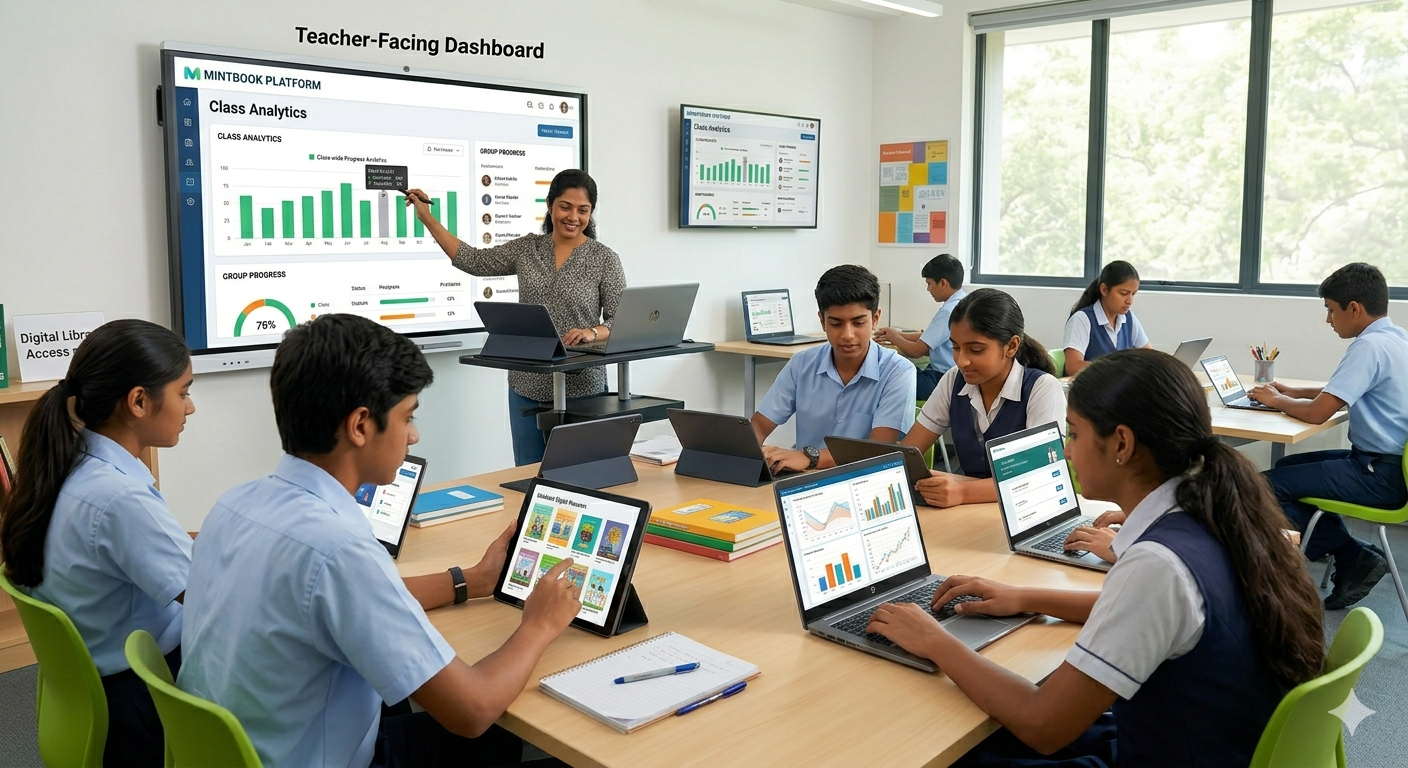
Why Schools Need a Unified Approach
Disjointed systems are likely to cause inefficiencies:
- Educators waste time addressing various platforms.
- Learners have a problem locating the appropriate resources.
- Administrators do not have a clear view of performance.
A Unified Learning System addresses these issues by providing a smooth experience.
Here’s how:
-
Seamless Content-to-Completion Journey
The Digital Library allows students to switch between learning of a concept and doing an assignment within the LMS System. Such continuity enhances concentration and interest.
-
Improved Learning outcome monitoring.
Having everything combined, teachers can simply track the interaction of students with materials and their performance on tests. This information-based understanding results in more individualized instruction.
-
Time Efficiency for Educators
Educators do not have to balance between several platforms. The lesson planning, content sharing, and evaluation occur in a single place.
- Consistent Learning Experience
The structured and unified interface allows students to have a better experience and less confusion.
How Digital Library + LMS Work Together
The true magic is when the two components are highly fused.
Content Meets Structure
The digital library offers important learning resources, and the LMS System is where they are structured into lesson plans, modules, and courses.
Learning Meets Assessment
Immediately after learning, students are allowed to use any knowledge they learn in quizzes, assignments, and tests on the same platform.
Data Meets Insight
Each interaction, reading a chapter or taking a quiz, is monitored, and this will assist the educators in understanding student behavior and performance.
This synergy has a direct effect on the most significant outcome: bettering the Learning Outcome.
Real Impact on Learning Outcomes
Learning is further facilitated when the students can access high-quality material with ease and in a well-organized manner.
Unified Learning System:
- Encourages self-paced learning
- Accommodates various styles of learning (visual, auditory, interactive)
- Identifies learning gaps early
- Promotes continuous improvement
Consequently, students do not merely go through lessons; they actually learn and remember.
The Role of Technology in Modern Classrooms
The movement towards integrated platforms is indicative of the wider change in education. Technology is no longer an add-on; it is at the core of the learning process.
Schools are seeking solutions that:
- Fit with contemporary curricula.
- Promote distance and remote education.
- Provide scalability and flexibility.
- Provide measurable results
All of these boxes are filled by a Unified Learning System, which is a valuable investment in institutions of the future.
How Mintbook Brings It All Together
This is where Mintbook comes in.
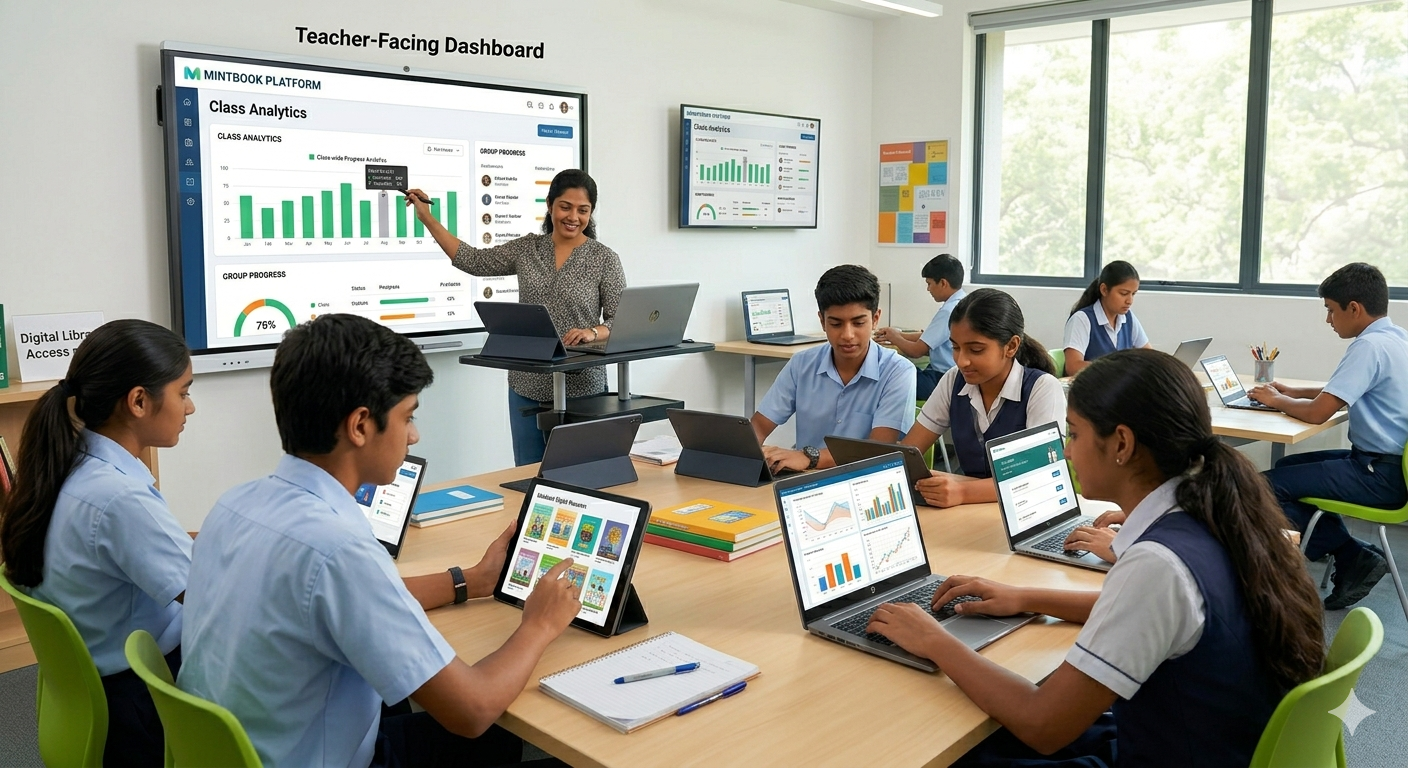
Mintbook is a complete Unified Learning System that integrates both a robust LMS System and a large Digital Library into one. It provides a complete learning experience that is specially designed to meet the requirements of schools and educational institutions.
What Mintbook Offers:
- Integrated Digital Library
A large library of curated learning materials in accordance with academic standards.
- Robust LMS System
Lesson planning, assignment creation, assessment, and performance tracking tools.
- User-Friendly Interface
Teachers and students can easily navigate the site and adapt it quickly.
- Data-Driven Insights
In-depth analytics to track progress and enhance Learning Outcomes.
- Customizable Solutions
Customized features to address the needs of the schools and institutions.
Mintbook does not simply bring technology to schools; it reinvents the learning process.
Why Choose a Unified Learning System Now?
Education is shifting to being personalized, accessible, and with outcomes that are measurable. Organizations that still use isolated tools will be lagging.
Through the implementation of the Unified Learning System:
- Efficiency in teaching can be increased in schools.
- Learners get more interaction in learning.
- Administrators get better control and visibility
Above all, it provides a learning environment in which all students can succeed.
Final Thoughts
A Unified Learning System is not merely a technological update, but a new direction toward better education.
Integrating the strengths of a Digital Library and an LMS System, schools can design a well-integrated, efficient, and effective learning system. The result? Enhanced interaction, efficiency, and better Learning Outcomes.
Want to Change Your Learning Process?
When you need to make your digital infrastructure simpler but get as much out of education as you can, it is time to consider Mintbook.
Learn how the Unified Learning System at Mintbook can assist your institution in transitioning off of the disjointed tools and into a complete learning ecosystem.
Mintbook is available today, and the future of learning is redefined.
